


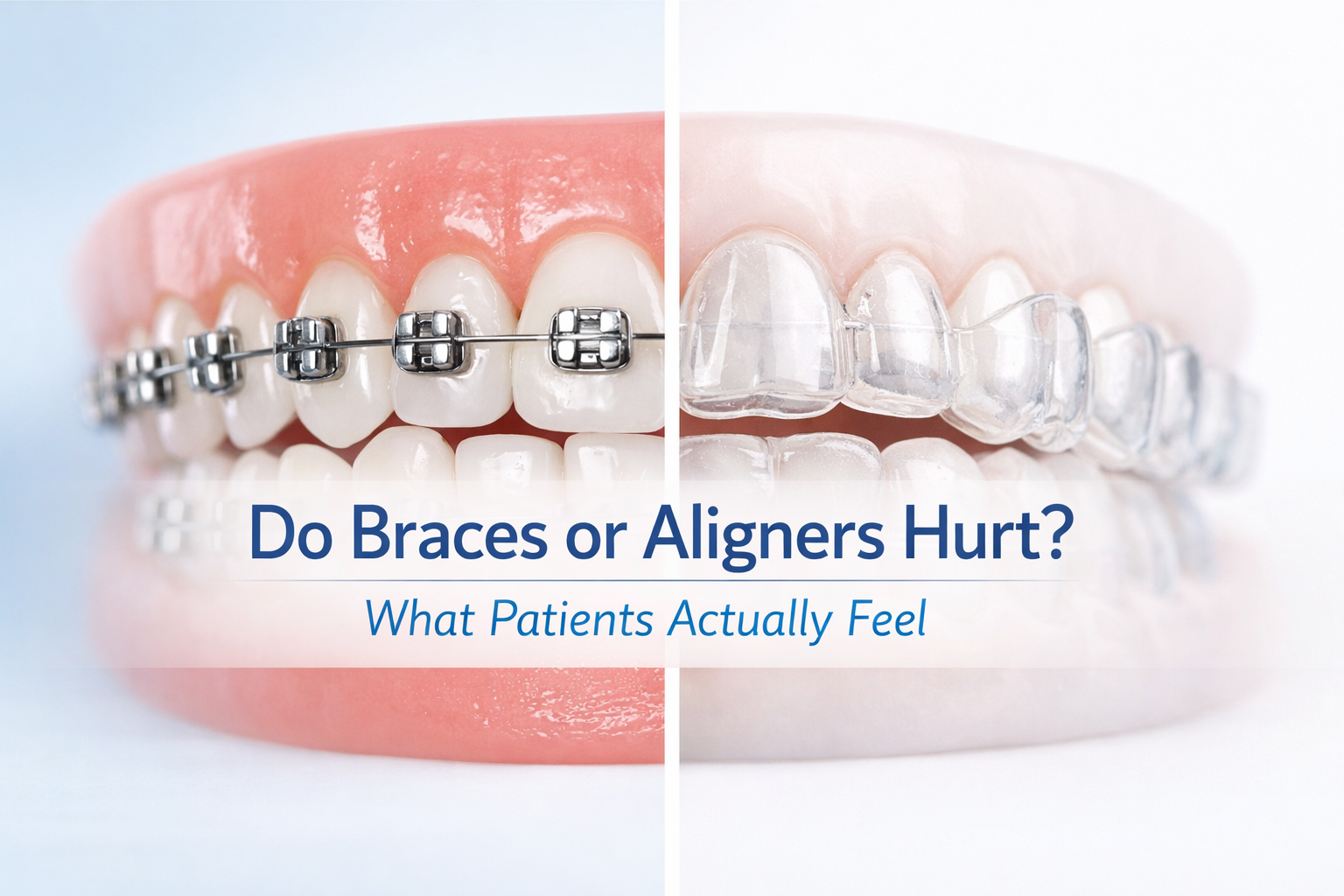
Do Braces or Aligners Hurt? What Patients Actually Feel
Insights from an Orthodontist in Thane
One of the most common concerns patients have when visiting an orthodontist in Thane is:
“Do braces or clear aligners hurt?”
Fear of pain often delays orthodontic treatment, even when alignment or bite correction is necessary. The reassuring truth is that both braces and clear aligners cause only temporary, manageable discomfort — not severe pain.
Let’s explain what patients actually feel and what to realistically expect.
Why Do Braces and Aligners Cause Discomfort?
Orthodontic treatment works by applying controlled pressure to gently move teeth into healthier positions. This natural process affects the surrounding bone and tissues, leading to short‑term soreness.
This discomfort:
-
Is normal and expected
-
Indicates that treatment is working
-
Reduces as the mouth adapts
With proper planning by an experienced orthodontist, discomfort is kept minimal and safe.
What Do Braces Actually Feel Like?
Braces do not hurt during placement.
Soreness usually begins a few hours later, once the teeth start responding to pressure.
Common Braces Sensations
-
Dull aching or tightness
-
Discomfort while chewing
-
Mild jaw fatigue
-
Temporary irritation of cheeks or lips from brackets
Most patients describe it as similar to muscle soreness after exercise.
Braces Pain Timeline
-
Day 1–2: Peak soreness
-
Day 3–4: Noticeable improvement
-
By Day 7: Mouth feels mostly normal
After tightening appointments, discomfort may return briefly but usually settles within 24–48 hours.
What Do Clear Aligners Feel Like?
Clear aligners move teeth gradually using a series of custom trays.
Common Aligner Sensations
-
Tightness on the first day of a new tray
-
Pressure rather than pain
-
Minimal irritation (no wires or brackets)
Many patients prefer aligners for their comfort and aesthetics. However, aligners must be worn 20–22 hours a day. Inconsistent wear can make trays feel tighter when reinserted.
Braces vs Aligners: Which Hurts More?
The honest answer:
Neither option is truly painful — the experience is simply different.
| Experience | Braces | Aligners |
|---|---|---|
| Initial discomfort | Moderate | Mild–moderate |
| Pressure style | Stronger initially | Gradual |
| Cheek irritation | Possible | Rare |
| Adjustment discomfort | Short‑term | With each new tray |
Pain perception varies depending on:
-
Amount of tooth movement required
-
Individual sensitivity
-
Oral and gum health
-
Treatment planning
How Discomfort Is Managed During Treatment?
Patients are commonly advised to:
-
Eat soft foods during the first few days
-
Use cold compresses or chilled foods
-
Apply orthodontic wax if brackets irritate cheeks
-
Rinse with warm salt water
-
Take pain‑relief medication if needed (as advised)
Most patients need minimal support beyond the first few days.
Does Discomfort Mean Treatment Is Working?
Yes.
Mild soreness means teeth are responding normally to orthodontic forces.
However, persistent or severe pain is not normal and should always be reviewed by your orthodontist.
FAQs – Orthodontic Pain Explained
Q1. Do braces hurt more than aligners?
Braces may feel more intense initially, while aligners apply gentler pressure. Both are manageable.
Q2. How long does orthodontic pain last?
Most patients feel improvement within 3–7 days.
Q3. Is getting braces put on painful?
No. Placement is painless. Soreness begins hours later.
Q4. Are aligners pain‑free?
No orthodontic treatment is completely pain‑free, but aligner discomfort is usually mild.
Q5. Is orthodontic pain worse for adults?
Adults may feel slightly more initial tightness, but adapt well.
Q6. Can orthodontic treatment damage teeth?
No, when supervised by a qualified orthodontist and combined with good oral hygiene.
Q7. Is aligner treatment faster than braces?
Aligner treatment can be faster in mild to moderate cases, especially when limited tooth movement is required. However, for complex alignment or bite correction, braces are often more efficient and predictable. The overall treatment time depends on case complexity, consistency of aligner wear, and precise treatment planning. A consultation with an experienced orthodontist in Thane is the best way to determine which option will deliver safe and timely results for you.
Final Thoughts
Orthodontic treatment involves temporary discomfort, but it is predictable and manageable. The long‑term benefits — better alignment, healthier bite, and improved confidence — far outweigh the short‑term soreness.
A consultation with an experienced orthodontist in Thane helps determine whether braces or aligners are better suited for you.