


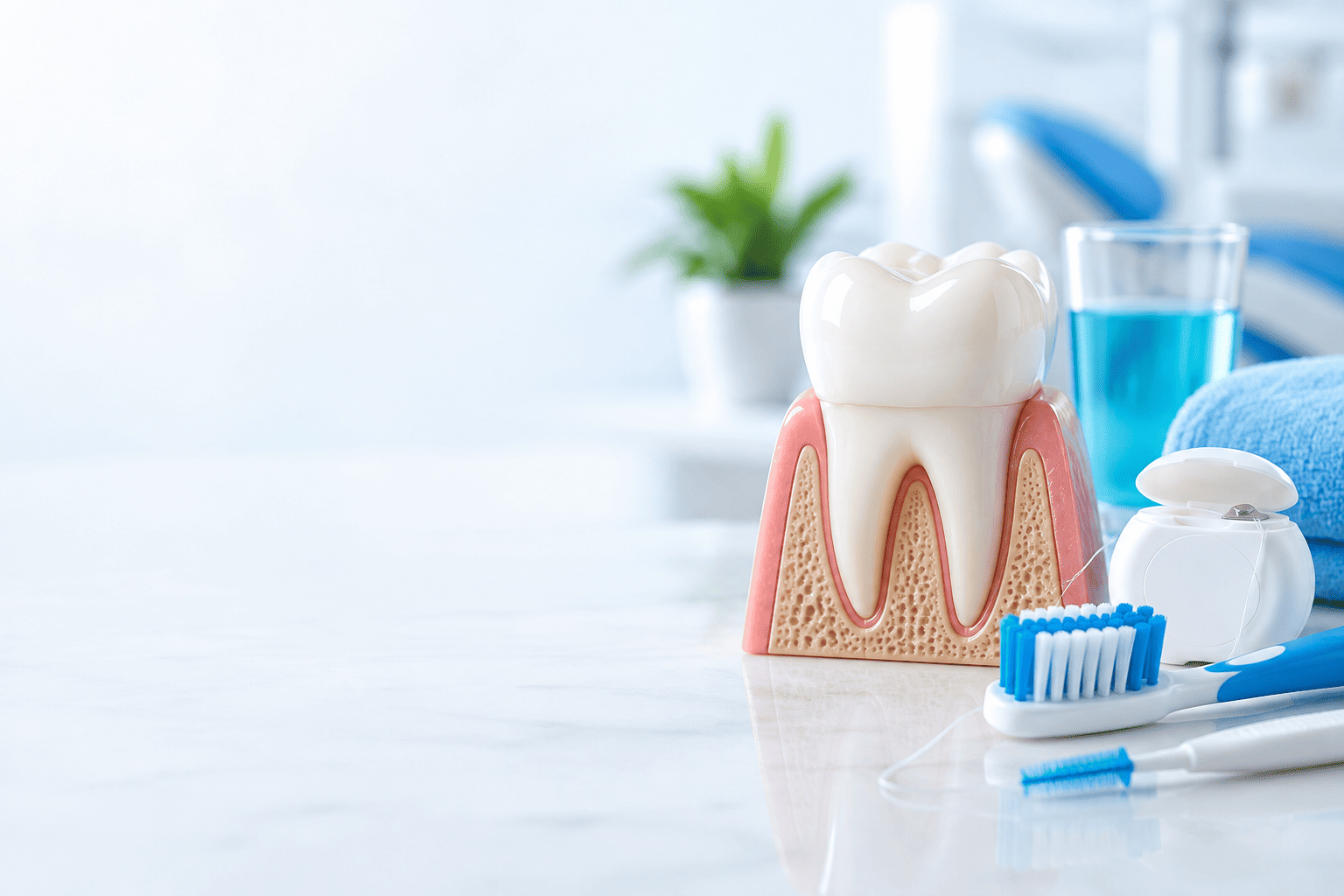
A root canal treatment and crown can help you keep your natural tooth for many years. But the treatment is not the end of the journey — good daily care is what helps protect your tooth and crown for the long term.
1. Brush twice a day
- Brush twice daily for 2 minutes using a soft-bristled toothbrush.
- An electric toothbrush can make it easier to clean thoroughly and consistently.
- Pay special attention to the gumline around the crown.
- Avoid brushing too aggressively.
Recommended: Oral-B electric toothbrush, or the Colgate SlimSoft manual toothbrush if you prefer brushing by hand.
2. Clean between your teeth every day
Your toothbrush cannot clean effectively between teeth. Daily interdental cleaning helps remove plaque and food particles from these areas. You can use:
- Dental floss
- Interdental brushes
- Water flosser
If you haven’t ordered one yet, a water flosser can be a convenient option for daily interdental cleaning. Recommended: the Oracura OC200 water flosser.
3. Use a fluoride toothpaste
Use a fluoride toothpaste twice a day to help protect your natural teeth from decay. If you are prone to cavities, your dentist may also recommend a remineralising toothpaste such as GC Tooth Mousse. Recommended brands: Colgate Total, Colgate, Pepsodent. Recommended: GC Tooth Mousse.
If you have sensitivity, gum problems or a high risk of decay, your dentist may recommend a different toothpaste specifically for you.
4. Be careful with hard foods
Although a crown is strong, avoid using your crowned tooth to:
- Bite ice
- Crack nuts or hard shells
- Bite pens, nails or other hard objects
- Open packets or bottles
If you have a habit of clenching or grinding your teeth, please let your dentist know. You may need additional protection such as a night guard.
5. Keep your gums healthy
The health of the gums around your crown is extremely important. Maintain good brushing and interdental cleaning, and don’t ignore bleeding or swelling around the crown.
6. Don’t skip your dental cleanings
Even if your tooth feels completely fine, regular professional cleaning and dental check-ups are important. Professional cleaning helps remove hardened deposits that cannot be removed with brushing alone, while regular examinations allow your dentist to identify problems early.
7. Stay in touch with your dentist
A root canal treated tooth can sometimes develop problems without causing obvious symptoms initially. So, don’t wait for pain to visit your dentist. Keep up with your recommended follow-up appointments so your dentist can monitor:
- The crown and its margins
- Your gums and surrounding teeth
- Your bite
- Any signs of recurrent infection or decay
Contact your dentist if you notice:
- Pain or discomfort while biting
- Sensitivity or a new unusual feeling
- Swelling or a pimple on the gum
- Food repeatedly getting stuck around the crown
- A loose, chipped or broken crown
- Any change in the way your teeth meet
Remember
Your crown protects your tooth — your daily habits protect your crown.
Brush well. Clean between your teeth. Avoid excessive biting forces. Get regular professional cleaning. And most importantly, stay connected with your dentist even when everything feels perfectly fine. With the right care and regular monitoring, your natural tooth can continue to serve you for many years.
Stay Connected
Rathi Dental Care
28B, Flat No 2, Vrindavan Society, Thane West, Maharashtra, India
+91-7208667500
Have a question or notice something unusual? We’re just a call away. Don’t wait for a problem to visit your dentist — prevention is always better than treatment.